Short sellers finally cash in on Deep Yellow (but not really)
Deep Yellow entered into a trading halt on Thursday to finalise $250 million capital raise.

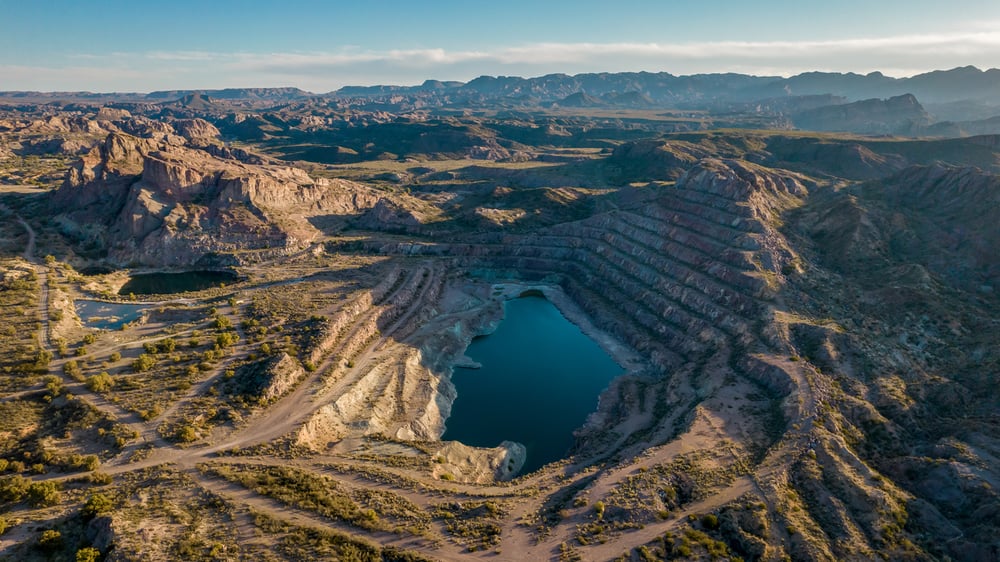
Source: iStock
Mentioned
KEY POINTS
- Deep Yellow attracted short sellers anticipating a capital raise to fund development costs associated for its Tumas Project, with short interest surging from 3.2% to 9.88%
- Deep Yellow entered a trading halt ahead of a $250 million capital raise, priced at $1.225 per share, signalling investor demand for uranium exposure
Short sellers have been piling into uranium explorer Deep Yellow (ASX: DYL) since November, armed with a pretty simple short thesis – The company will eventually need to raise capital to fund the development of its Tumas Project.
A capital raise is almost always conducted at a discount to the last traded price, allowing short sellers to capture the downside and cover their shorts.
Short interest in the stock has soared from 3.2% in November 2023 to 9.88% as of 1 March 2024. During this time, the stock rallied as much as 32% after uranium prices crossed the US$100 level for the first time in 17 years. Recent weakness in uranium prices has pushed Deep Yellow shares back to November 2023 levels.

Deep Yellow 12-month price chart (Source: Market Index)
We got em – But not really
Deep Yellow shares entered into a trading halt before Thursday market open. The company said it was "in the process of finalising arrangements in relation to a capital raising."
According to the Financial Review, the company is seeking to raise $250 million at an offer price of $1.225 per new share. "Bulk of the proceeds, $220 million, are earmarked to fund the development of Deep Yellow's wholly owned Tumas project in Namibia, which has guided to 3.75 million pounds in annual capacity," notes the article.
The $250 million raise represents a relatively large sum compared to the company's $975 million market cap, yet the new shares will be issued at a negligible 3.9% discount to its last close.
Typically, capital raises offer new shares at discounts between 10-20%. This narrow discount suggests robust investor demand for both Deep Yellow shares and exposure to uranium.
Deep Yellow shares could even open in positive territory if uranium stocks and prices for the commodity push higher before the stock resumes trading.
Food for thought
What are short sellers lingering around for now that the capital raise thesis is done and dusted?
Short interest among local uranium names isn't particularly high. Some of the top shorted ones include (# rank among shorted stocks):