Sprott says the "Uranium bull market remains intact"
Uranium is finding its groove again. Sprott talks uranium markets so far in 2023 and its outlook.

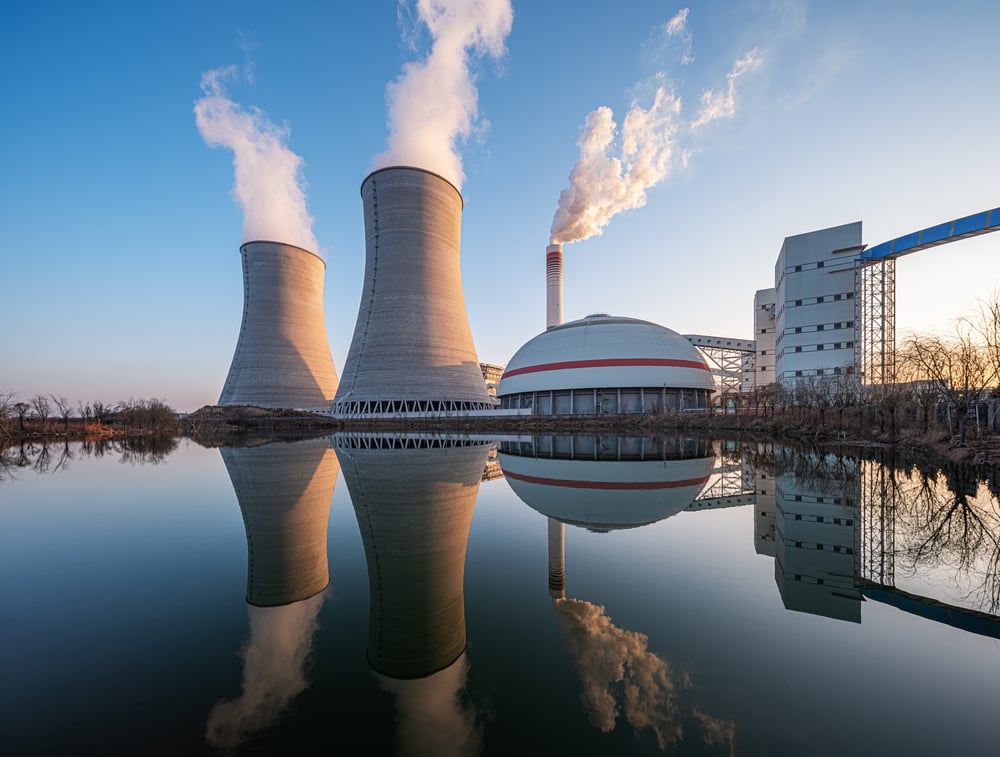
Source: iStock
Mentioned
KEY POINTS
- Uranium spot prices rose 5.05% in January to US$50.75 a pound while uranium stocks rose 14.65%
- Sprott Asset Management says the uranium bull market "still has a long way to run"
- Factors such as rising nuclear energy adoption, uncertain supply and a shift to Western uranium conversion will support uranium prices, according to Sprott
Between July 2021 and August 2022, Sprott Asset Management single-handedly doubled the price of uranium from around US$30 a pound to US$60. They achieved this by aggressively buying uranium off the illiquid spot market which tightened supply.
By October 2021, the fund had already amassed 32.6 million pounds of uranium, equivalent to roughly 76% of annual sales by the world's largest producer, Kazatomprom.
As of February 10 2023, the fund holds 60.9 million pounds. According to the World Nuclear Association, global uranium consumption sits at approximately 132 million pounds for electricity generation in nuclear power plants.
In this piece, I take a look at Sprott's latest update about uranium's January jump and its short-to-medium term outlook for the energy metal.
A strong January
"The U3O8 uranium spot price rose from $48.31 to $50.75 per pound in January, a 5.05% increase, while uranium mining equities gained 14.65%," said Sprott.
The catalyst behind the strong month was mostly thanks to the broader market factors such as the "the January effect, lessening fears that the US economy is heading towards recession and declining inflation."
Markets aside, Sprott noted the "growing recognition by global governments that nuclear energy plays a vital dual role by supporting the energy transition." This included:
Belgium's continued U-turn on nuclear energy by extending the life of two reactors by 10 years (compared to plans to completely phase out nuclear by 2025).
Sweden preparing legislation that caps the number of nuclear reactors/new reactors in certain locations.
South Korea curbed its plans for renewables in favour of nuclear energy.
"Uranium Bull Market Remains Intact"
Sprott says the uranium bull market "still has a long way to run", which is a little ironic because they were the ones who jump started the rally (and also hold 60.9 million pounds of uranium).
Nevertheless, the fund is positive on the macro outlook for uranium and nuclear power. This view is underpinned by nuclear's role in energy security as renewables "often suffer from intermittency and low capacity, and require offsets with base load energy sources, such as coal, natural gas or nuclear power plants."
"Of these, nuclear power has the highest base load capacity. We believe ongoing supply chain disruptions may likely cause utilities to seek out the base load reliability of nuclear power."
Uranium conversion and enrichment services were also brought into the spotlight. The price for these services more than doubled in 2022 and surprisingly outperformed uranium spot prices.
"We believe this upward price pressure will support the uranium spot price," said Sprott.

History of uranium prices (Source: Sprott)
Of note, Russia accounts for a small portion of uranium production (approximately 6% of global output) but plays a greater downstream role, responsible for 27% of global uranium conversion capacity and 39% of fuel enrichment. Sprott notes that legacy contracts with Russia are "being honoured" but "utilities are not signing any new contracts with Russian entities".
This dynamic is expected to see the US restart its only domestic conversion facility, ConverDyn, in the first-half of 2023.
"This shift to Western conversion and a lack of enrichment capacity is the bottleneck for higher uranium demand," Sprott said.
"Once new conversion capacity comes online, we anticipate an industry shift from underfeeding to overfeeding should significantly increase uranium demand in 2023 and beyond, which is ultimately supportive of uranium miners."
ASX-listed uranium stocks
A list of companies trading above $100 market cap.
Ticker | Company | Mkt Cap | 1 Year % Chg | Status |
|---|---|---|---|---|
Paladin Energy | $2.3bn | 5.5% | Prod targeted for 1Q24 | |
SILEX Systems | $1.0bn | 322% | Progressing uranium enrichment technologies | |
Boss Energy | $930m | 33% | Proj construction. First prod targeted for 4Q23 | |
Deep Yellow | $580m | 3.3% | DFS complete. Targeting FEED and Resource upgrade in 2023 | |
Lotus Resources | $310m | -1.1% | DFS complete. Seeking offtakes and proj financing | |
Bannerman Energy | $285m | -2.8% | DFS complete. Moving towards finance, offtake and FEED | |
Peninsula Energy | $191m | -10.3% | FID complete. Deliveries to start 4Q23 | |
Aura Energy | $173m | 9.8% | Progressing FEED and optimise feasibility study | |
Alligator Energy | $135m | -37% | Resource drilling | |
Elevate Uranium | $115m | -7.7% | Resource drilling |
Data as at 12:00 pm AEDT, 14 February 2023