Askari’s second African tenement proves high-grades on-site, and not just lithium
Maiden RC drilling this month to follow up today's results from a 126-sample-strong rockchip run

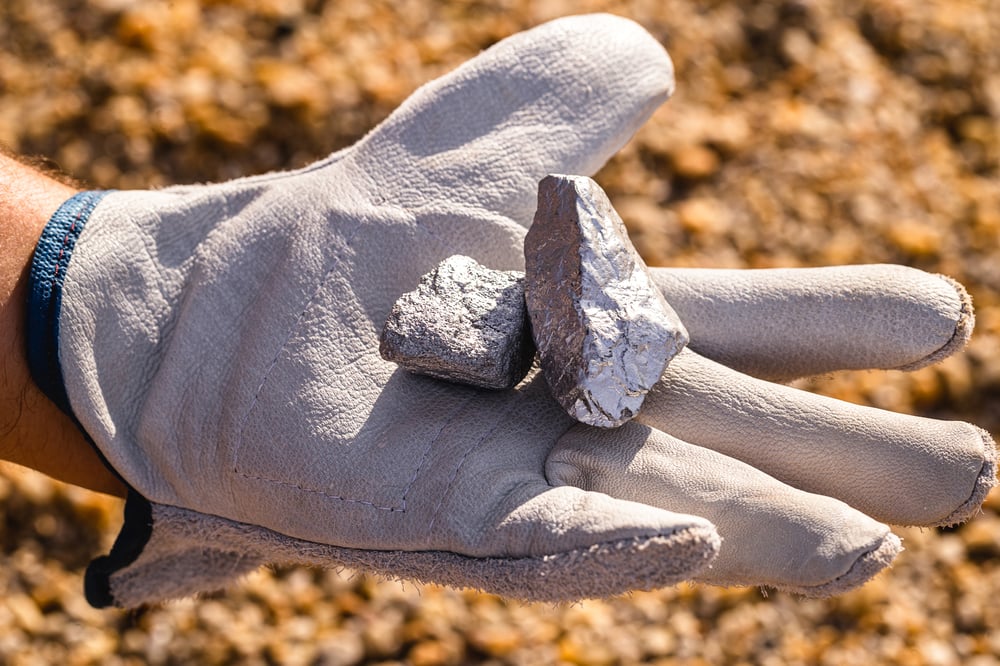
Source: iStock
Mentioned
KEY POINTS
- Askari will commence drilling spodumene pegmatites on-site Uis this month
- The company’s fieldwork run through 2022 found high-grades of lithium in rock chips, as well as rubidium
- The company’s exploration chief says Askari has a mandate to accelerate exploration at Uis
Askari Metals (ASX:AS2) fieldworkers have successfully detected the presence of high-grade lithium in rock chips on-site the company’s second permit making up its Uis Lithium Project, with the second permit called EPL8535.
The company also found rubidium in outcrops. Rubidium is a very high value metal with prices in May last year hitting over US$6,000/kg.
Investor information advisory, Next Investors, classify high-grade lithium as that in concentrations over 1%. Rubidium is treated the same.
Today, Askari reports the following rock-chip assay results:
Lithium: 3.3%
Tin: 3.2%
Tantalum: 0.42%
Rubidium: 0.79%
Making sense of grades
This batch of data reflects the highest grades of each metal found from across 162 rock chip samples put together.
Prospective investors should note that hard-rock rock-chip results typically boast higher grades than what may be found underground.
Askari’s first phase drilling at the second Uis licence is set to begin this week, with multiple pegmatite targets at depth to be tested.
“The first phase of drilling EPL 8535 is imminent and exploration work on the neighbouring EPL 7345 licence continues to progress,” Askari’s exploration chief Johan Lambrechts said.
“These extraordinary results from the due diligence sampling campaign are significant for Askari, including five results greater than 3% Li2O.”
Lithium pegmatites proven
Fieldwork also turned up evidence of both spodumene and lepidolite-type pegmatite mineralisation.
Spodumene is the holy grail of hard-rock lithium for many Australian explorers, whereas lepidolite chemistry is well understood but downstream refining providers less numerous.
Drilling will also seek to determine in which direction lithium mineralisation trends on-site (and where it doesn’t) in the first step towards building a comprehensive model of the geological body underground.
“The Company has been rewarded for its commitment to unlocking mineral resource potential as efficiently as possible…Askari is strategically advancing its drive toward the top of the lithium exploration field in Namibia,” Lambrechts added.

Askari's 12 month charts. One year returns are up 60%
Disclaimer: Market Index helps small-cap ASX listed companies connect with Australian investors through clear and concise articles on key developments. Askari was a client at the time of publishing. All coverage contains factual information only and should not be interpreted as an opinion or financial advice.