Lotus Resources crashes 62% after brutal capital raise, Macquarie cuts target by 81%
Lotus Resources is ASX’s most shorted stock and its latest discounted cap raise causes share price to nosedive.

Source: iStock
Mentioned
KEY POINTS
- A February capital raise was meant to take balance sheet risk off the table. Six months later, Lotus was back, bailing itself out at a punishing discount.
- Operational stumbles, a landlocked mine and an acid-price shock from the Iran war converged, forcing a rescue package that reset the equity structure and rewarded short sellers.
- Discover how brokers pivoted from bullish price targets to a stark reappraisal, and why Lotus is now a case study in the working-capital headroom uranium developers need.
Lotus Resources (LOT) faced its reckoning when a challenged balance sheet, operational headwinds and sulphuric acid shortages all converged, forcing the emerging uranium producer into a desperate capital raising, priced at a steep 66% discount.
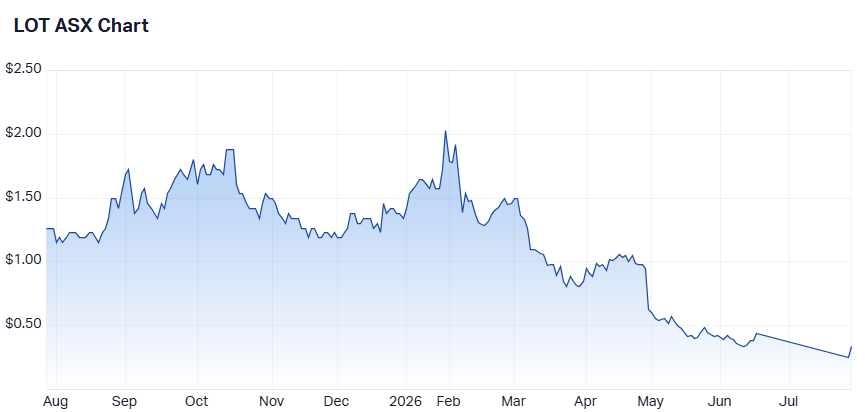
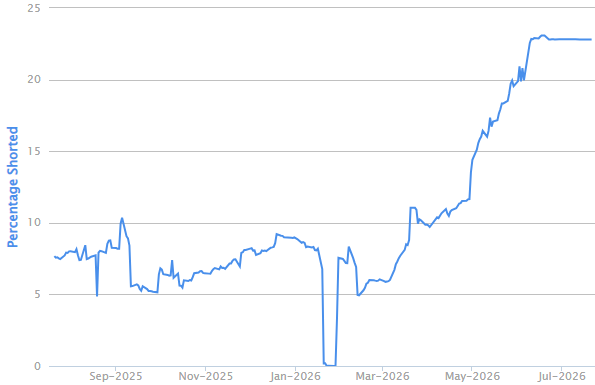
When the stock resumed trading on Monday, it tumbled 62% to 25 cents, the lowest since March 2020. Not everyone was unhappy though, as approximately a fifth of its register was short.
Source: Market Index, 1 year Lotus Resources share price
This article looks at how the year has unfolded for the embattled uranium miner and how the experts have changed their tune from their bullish February stance.
Lotus’ year so far
In early February, Lotus raised $76 million at $2.15 per share, a 25.3% discount to its last close. The raise was to combat ramp-up delays, sulphuric acid shortages and challenges accessing the appropriate debt structures efficiently. It also needed to bolster coffers to make sure it could maintain operations at Kayelekera, as there was a 5-6 month working capital cycle before the mine started generating cash receipts.
At the time, February 17, Macquarie was bullish rating the stock Outperform and giving it a 12-month price target of $3.00, against the $1.93 it was trading that same day. The broker saw the capital raise as positive, taking balance sheet issues off the table.
Come the company’s April 30 quarterly and its problems begin to worsen outside of its balance sheet. While production levels remained positive, the company said its “processing performance was impacted by reagent management, grade reconciliation, substantially lower recoveries, planned plant maintenance and capital upgrades." The market took the news badly and LOT’s share price fell 34% on the day, to 94 cents.
Short interest also began to spike after the announcement, from around 11%, to now over 22%.
Source: Shortman, Lotus Resources 1 year short interest
Reaction to latest capital raise
After a five-week long trading halt, the company raised $60 million at 22 cents per share, a steep 66% discount and representing approximately 100% of existing shares on issue.
Alongside the $60 million entitlement offer, Lotus has secured a binding agreement for $35 million in senior unsecured convertible notes from CVI Investments. And a binding commitment letter with Mercuria Energy Trading for a $43 million inventory-backed prepayment facility.
The company said, the “complete Strategic Funding Package [is] to reset the balance sheet and provide financial flexibility, derisking Kayelekera’s continued ramp-up as Lotus transitions to steady state production,” in its July 23 announcement.
After the July 27 resumption of trading, Macquarie downgraded to Neutral and slashed its price target by 81% to $0.25 per share, the same as its July 27 close. "The location of the Kayelekera mine has proven to be one of the major challenges ultimately leading to such value dilution," noted the analysts.
Macquarie also mentions that several factors have compounded the damage. Getting diesel and sulphuric acid into landlocked Malawi, and getting uranium out has proven difficult, with Lotus reliant on the Dar es Salaam export route while Walvis Bay approvals remain outstanding. A lack of debt funding, including a working capital facility, and a series of operational mistakes have added to the value destruction.
The Iran war made things worse, according to Macquarie, sending sulphuric acid prices soaring, with Lotus flagging a more than tenfold increase in acid costs delivered to the mine. The conflict also redrew shipping routes, turning Dar es Salaam into a disadvantage and squeezing the company's cashflow.
Bottom line – Sulphuric acid shortages are nothing new to the industry, with the world’s largest uranium producer Kazatomprom, having cut its guidance across 2024-25 due to uncertainties in supply. As an emerging uranium producer seeking to ramp-up production, Lotus had no capacity to absorb such a string of setbacks. As Macquarie puts it, “survival has come at an enormous cost to the equity structure. Lotus now a case study for ASX investors in the need for uranium developers to maintain sufficient working capital headroom buffer.”