Lithium's BESS hangover: UBS sees no rebound before year end
A fresh UBS note puts the battery storage story at the centre of lithium's latest price correction – and sees no relief before 2027.

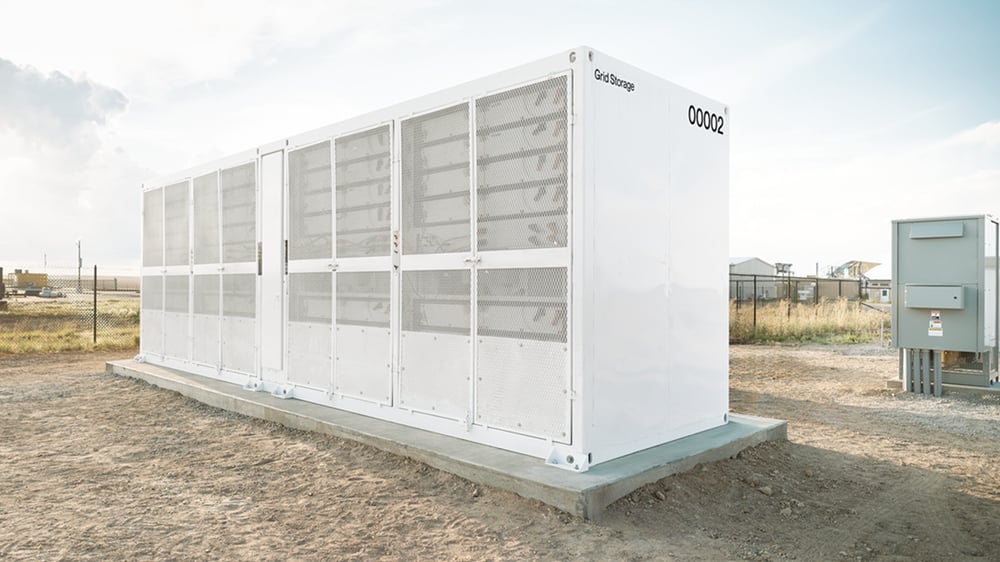
Source: Battery storage system. Source: Peak Energy.
Mentioned
KEY POINTS
- The benchmark lithium carbonate contract has fallen 54% from its May peak, dragging ASX lithium stocks with it. Our in-depth lithium update on Friday covered demand, supply, GFEX and the latest broker forecasts.
- New research has emerged from UBS, citing lithium analyst Sky Han’s view that battery energy storage (BESS) is the key driver of lithium's recent weakness.
- This short addendum sets out UBS's view and charts how the market’s optimistic, then pessimistic views of the BESS cycle played out in lithium prices.
At Market Index, we gather the latest broker research and bring you in-depth views on the markets that matter to ASX investors. Friday's lithium update worked through the latest demand and supply factors, the growing influence of GFEX futures, and the latest broker market balance and price forecasts.
We typically provide a lithium market update when relevant research accumulates, but a UBS note received after my article went live on Friday was too closely relevant to hold back. It confirms my view that the battery storage story is the centre of lithium's recent correction. Here's what UBS said.
UBS: BESS is the key driver
Sky Han is UBS’s Hong Kong-based lithium analyst. His latest update proposes that near-term weakness in lithium pricing is being driven by inventory dynamics, with BESS the key driver this time. UBS compares the current destocking by battery manufacturers to the five-month cycle from late 2022 into 2023.
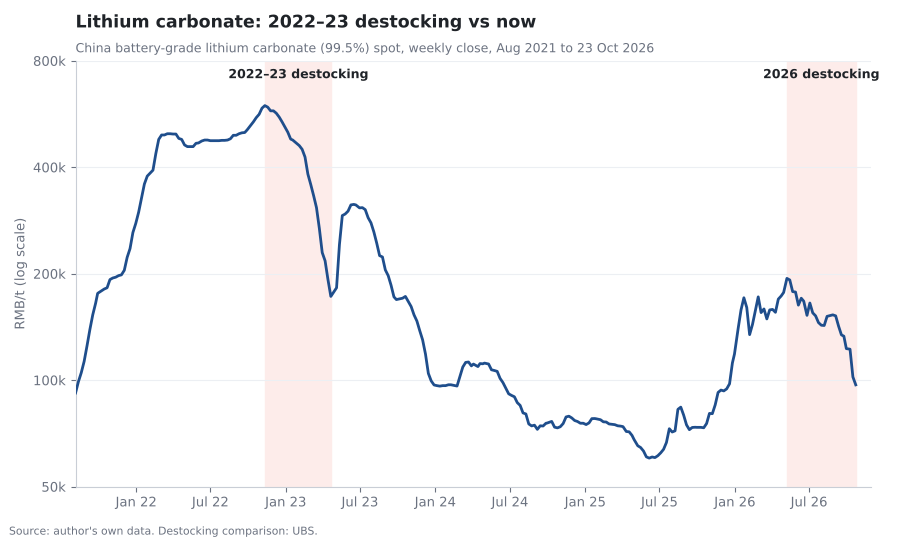
Chart: Lithium carbonate 2022-23 destocking cycle and present
UBS notes that storage installations are lagging as project returns fall, with system operating fees rising materially and tariff spreads narrowing. This has led battery makers to pare back production expectations into year end. Further, Beijing's anti-involution measures are likely to dampen the rollout of new downstream capacity into 2027.
UBS believes spot prices are reflecting its forecasts of easing demand and faster supply growth into 2027, with demand growth slowing from 26% in 2026 to 19% in 2027, while supply growth steps up from about 18% to 25%. This modelling equates to 445kt of new supply, led by Africa (more than 160kt), China (145kt) and Australia (80kt).
As is so often the case in commodity markets, effect follows cause… UBS notes that at current prices, pressure is building on funding that largely brownfield growth and on the profitability of swing producers that have recently re-entered the market. Despite this potential handbrake on supply, Han sees no rebound before year end – but does see cost support around RMB80,000/t. This could provide “a potential floor” for prices into year end, the note offers.
How the BESS cycle played out
Optimism about BESS demand, alongside Beijing's supply-side curbs such as the August 2025 suspension of CATL's Jianxiawo mine, powered GFEX carbonate 227% from its June 2025 low to its 13 May peak. That peak coincided with the start of Beijing's freeze on new battery capacity approvals. From there, BESS expectations unwound, and the selling gathered pace as battery makers destocked and, arguably, as short sellers piled into GFEX.
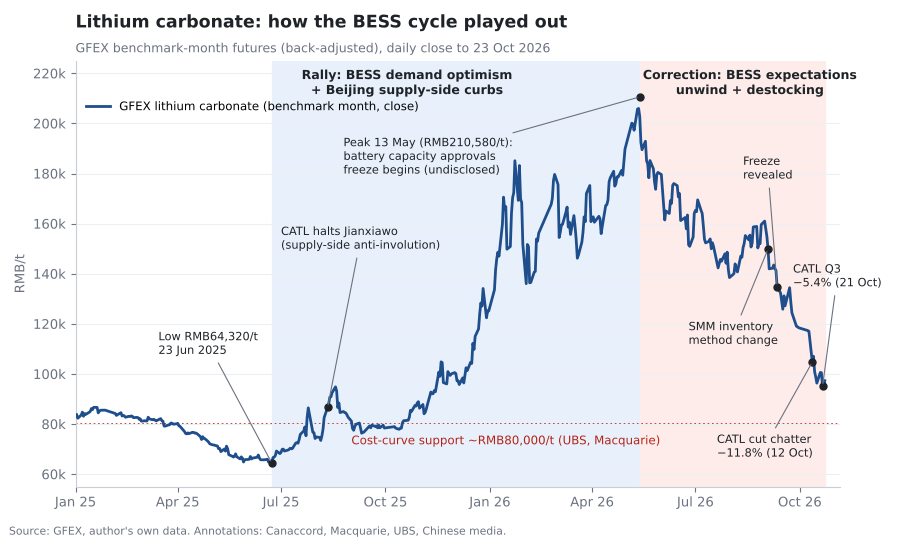
Lithium carbonate futures (benchmark month, back-adjusted), GFEX, with key events. Source: GFEX, author's own data, as at close 23 October 2026.
Here’s the kicker in lithium’s latest boom-bust cycle, its third in less than a decade. Arguably, Beijing’s freeze on approvals for new battery factories – reportedly in place since May, though never officially announced – started this bust, but it wasn’t widely reported until September. The chart above shows the May peak, and the selling accelerating in September. The key takeaway: The chart told the story long before the news did.
Conclusion
UBS sees no rebound before year end, with cost support at about RMB80,000/t – notably, the same level Macquarie identifies, and about 18% below Friday's close of RMB97,280/t. With the price action devoid of any meaningful buy-the-dip bounce, there’s little sign of urgency among buyers, suggesting market participants feel prices are yet to reach a meaningful buy level.
For investors in ASX lithium stocks, it’s worth considering that charts contain all information available in the market – both public and private. Demand votes, supply votes, and the result is the price. If the price action is at odds with one’s bullish (or bearish) views on a stock or a commodity, then perhaps you might be wrong… because the old saying remains: the market is always right!
For the full picture on demand, supply, GFEX and broker forecasts, see Friday's lithium update.
References: Broker research from UBS's Australian resources lithium update, with reference to Macquarie Research's lithium market update. Market data from the GFEX benchmark lithium carbonate futures contract. Chart annotations draw on Canaccord Genuity and Macquarie research and Chinese financial media reporting, as detailed in Friday's lithium update.