ASX Dividend Stocks: This 6-8% yielder held steady during the market selloff
While the S&P/ASX 200 tumbled 14% between February 14 and April 7, Dalrymple Bay Infrastructure shares surprisingly gained 2.5%.

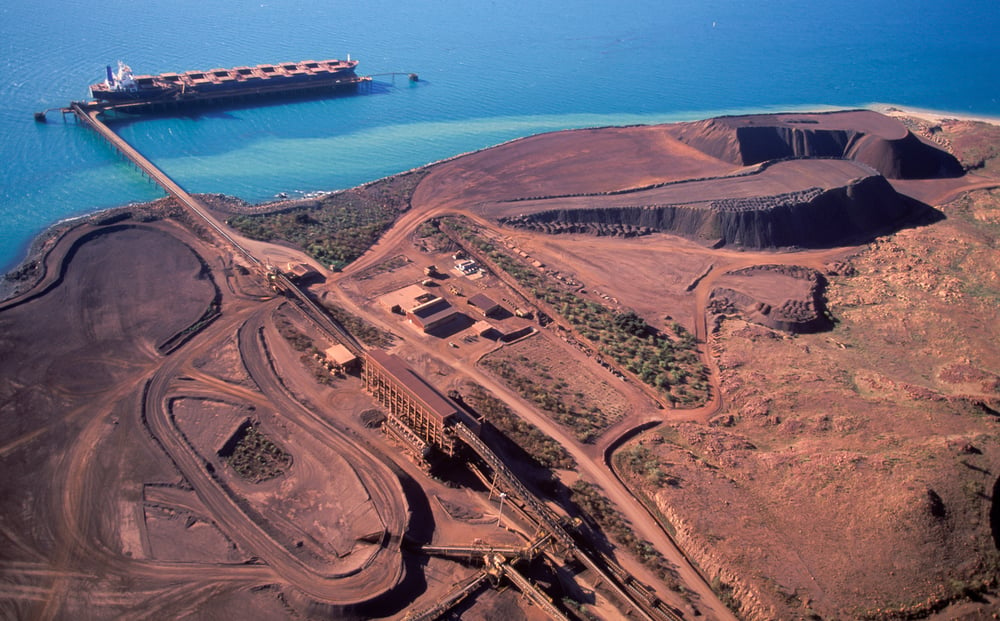
Source: iStock
Mentioned
KEY POINTS
- Dalrymple Bay Infrastructure (DBI) operates the world’s largest metallurgical coal export terminal
- DBI’s revenue comes from a take-or-pay TIC fee on 84.2 million tonnes of contracted capacity, ensuring steady income regardless of coal price slumps or export volumes through at least 2028
- DBI forecasts a 2025 dividend of 23 cents per share, up 7% year-on-year. This translates to a yield of approximately 5.9% at current prices ($3.85)
I'm on a mission to uncover some of the ASX's most compelling dividend-paying stocks. The aim is to provide readers with the key data and forecasts to make more informed decisions. Today, we're taking another look at Dalrymple Bay Infrastructure – the operator of the world's largest metallurgical coal export facility in Queensland.
Global equity markets have been a brutal rollercoaster, driven by President Trump’s America-First trade war. Between February 14 and April 7, the S&P/ASX 200 plunged as much as 14%.
Over the same time period, Dalrymple Bay Infrastructure (ASX: DBI) managed to post a 2.5% gain. In fact, the stock is now back at all-time highs, while the broader market has yet to recoup even half of its recent losses. So what's the secret sauce behind this resilience?
Rock-Solid Earnings
To understand why the stock isn't budging in the face of a global trade war and recession fears, you need to peek under the hood of its business model.
DBI operates the Dalrymple Bay Terminal (DBT), the cheapest export route for Bowen Basin mines, serving giants like Rio Tinto, Glencore, Anglo American, and BHP. It doesn’t own the terminal outright — rather, it holds a 99-year lease (50 years initial, plus a 49-year option) from the Queensland Government.
DBI’s profit and loss statement stands out due to two line items that offset each other. Here’s a snapshot from their 2024 full-year results (year ended December 31, 2024):

Source: Dalrymple Bay Infrastructure 2024 full year financial report
Taking a closer look at the line items:
TIC revenue: This is the company's core revenue stream — a fee charged per tonne of coal handled at DBT.
Handling revenue: DBI passes all operating and maintenance costs (think labor, equipment, upkeep) straight to its customers. This means handling revenue always matches handling costs.
Revenue from capital works: DBI funds Non-Expansion Capital Expenditure (NECAP) projects — like safety upgrades or equipment replacements — with its own cash or debt. These costs are capitalised (not expensed immediately) and recovered over time through TIC rate hikes, including a return tied to bond yields. That’s why "revenue from capital works" equals "capital works costs".
After an NECAP project wraps up, the TIC adjusts upward starting July 1 the following year, covering the expenditure plus a modest return. With handling and capital costs fully offset, DBI’s only real expense above the EBITDA line is general and administrative (G&A) costs. This lean structure delivered a 94.4% EBITDA margin in 2024.
Take-or-Pay Stability
Coal prices have taken a beating lately. Australian coal hit a four-year low, with Newcastle futures down 24% over the past year to US$98/tonne, thanks to oversupply, a mild northern hemisphere winter, and economic jitters. This has hammered coal stocks like Whitehaven Coal and New Hope, down 25 and 36% year-to-date, respectively. But this is not an issue for DBI. As the company noted in its 2024 results:
"Regardless of the tonnes exported, DBI receives the TIC on every tonne of the terminal’s annual contracted capacity of 84.2mt. All capacity is fully contracted to at least 2028."
In other words, DBI gets paid no matter what. Whether coal volumes rise or fall, those take-or-pay contracts lock in revenue stability.
Dividend Appeal
Looking ahead, DBI has guided for a 2025 full-year distribution of 23 cents per share, paid quarterly. This represents a 7% year-on-year increase. Such certainty around earnings and dividends is rare.
Even in a market selloff, DBI's shares should remain well supported. The lower the price dips, the juicier the yield gets, which attracts income-oriented investors. Let's say the stock dipped 15% amid the recent turmoil from $3.85 to $3.25. That would push its dividend yield from approximately 5.9% to 7.0%.
To add some perspective, household dividend stocks like Commonwealth Bank, BHP and Telstra currently yield 3.0%, 5.2% and 4.2% respectively.
This might explain why the stock has been so steady over the years. The below weekly price chart showcases a steady uptrend, with shallow pullbacks.

Dalrymple Bay Infrastructure weekly price chart (Source: TradingView)