ASX dividend stocks: A ~6% yielder hit by an unexpected block trade
Brookfield's $527m block trade may have created an opportunity in this defensive infrastructure stock with contracted revenue through 2028.

Source: iStock
Mentioned
KEY POINTS
- Brookfield sold its entire 26% stake in a $527 million block trade at $4.05 per share, creating a temporary selloff and pushing yields above 6.0%.
- DBI has all 84.2 million tonnes of terminal capacity contracted through 2028 via take-or-pay agreements, providing predictable cash flows regardless of coal prices.
- The stock has already recovered 5.1% since the selldown with historical precedent showing quick recoveries when yields reach attractive levels for income investors.
Dalrymple Bay Infrastructure (ASX: DBI) suffered a rare 6.4% selloff on Wednesday after its largest shareholder sold its entire stake at a sizeable discount.
Brookfield Infrastructure Partners offloaded its remaining 26% stake through a $527 million block trade on Tuesday night, priced at $4.05 per share, a 6.9% discount to the previous day's close. The timing raised eyebrows, as the selldown came three months ahead of Brookfield's own six-month escrow commitment.
The private equity giant's exit marks the end of a successful investment cycle. Brookfield originally acquired the coal terminal operator from Babcock & Brown in 2010 during the post-financial crisis distressed asset wave, before floating it on the ASX in 2020 at $2.57 per share.
Boring can be beautiful
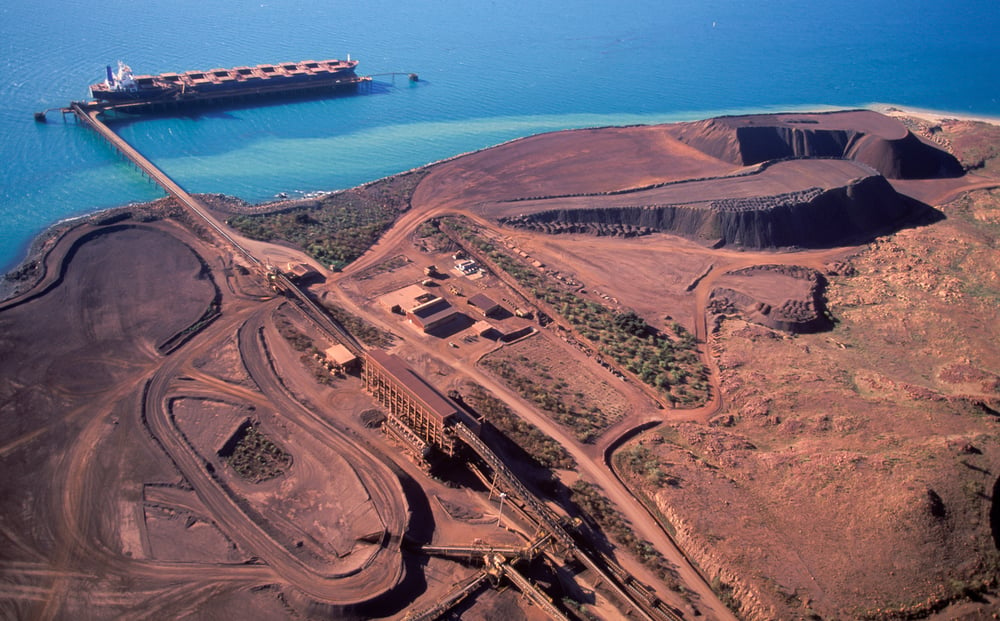
DBI's business model offers unusual predictability. The company's revenue model is anchored by take-or-pay contracts, with all 84.2 million tonnes of capacity fully contracted through 2028. This means exporters pay the terminal charge whether they use the capacity or not, providing stable cash flows, independent of coal prices or actual shipping volumes.
In addition, operating and maintenance expenses are passed directly to customers, removing cost risk, while non-expansion capex is recovered via tariff increases linked to bond yields. The terminal is also the lowest-cost export pathway for Bowen Basin miners such as Peabody, Stanmore and Whitehaven, reinforcing its competitive moat.
To put it all together, the company's revenue and earnings visibility is crystal clear. The stock has been unaffected by weak coal prices, and during volatile market periods like Trump's Liberation Day tariff announcement, it barely moved.
Dividend outlook
Following DBI's latest results announced on 22 August, the company guided to an FY26 dividend of 24.5 cents per share, a 6.5% increase from the prior period. Management also reaffirmed its target distribution growth of 3-7% per annum and maintained its 60-80% dividend payout ratio.
This dividend guidance has created interesting yield dynamics, given the recent share price volatility:
The stock hit an all-time high of $4.93 on 11 August, which implies a 4.96% yield
Prior to the Brookfield selldown, the stock was trading at $4.35 or a 5.6% yield
The stock briefly hit $4.05 post selldown or a 6.04% yield
Given DBI's earnings visibility and dividend guidance, there appears to be a natural floor to how far the stock can fall. If shares dropped to $3.50, the yield would reach approximately 7.0%, a level that would likely attract income-seeking investors and provide price support.
This isn't just theory, we've seen it play out before. On 12 June, Brookfield offloaded $428 million via a block trade priced at $3.72 or a 7.9% discount to its previous close. The next day, DBI shares dipped 6.4% to $3.78, closely matching the sale price.
However, the recovery was relatively quick. DBI gained around 8% over the next seven trading sessions, fully recovering the selldown-related weakness. Within a month, the stock had rallied almost 20% from the 13 June lows.
The bottom line
DBI presents a unique case study in how dividend-focused infrastructure assets can recover from large shareholder selldowns. The combination of predictable cash flows and attractive yield creates natural buying interest and a share price floor.
DBI has now rallied 5.1% since Wednesday, and within 2% of pre-selldown levels. The Brookfield exit removes a key overhang and also increases the stock's free float and liquidity.
The increased free float from the previous selldown was also key to DBI's recent inclusion in the S&P/ASX 200 rebalance, potentially attracting additional institutional buying.