While SaaS stocks were falling out of bed, these overlooked growth stories kept compounding
While tech swung wildly, infrastructure kept delivering. Magellan’s Ben McVicar reveals the global assets set to compound for decades.

Mentioned
Please note, this interview was filmed on 10 March 2026.
As you’re watching the growth sleeve of your portfolio get chewed up and spat out by market gyrations, let it serve as a potent reminder of the value of dependable cash flows, essential services, and the kind of long-duration assets that can compound quietly over decades.
Boring? Perhaps. But also highly unlikely to dive 50% like a SaaS stock waking up on the wrong side of the AI-disruption bed.
The types of investments I’m talking about are infrastructure assets, but as you will soon learn, how ‘infrastructure’ is defined is also incredibly important. At a high level, Magellan’s Ben McVicar believes infrastructure done well should not focus on predicting what will change next, but on focusing on what will remain constant – no small feat in today’s ‘next big thing’ market environment.
“It is not about identifying the things that are about to change. It is about identifying the things that will not change. The types of services our companies provide are things you use every day – running water, electricity, motorways. That tends to create a very reliable demand profile.”
For McVicar, that simple framework sits at the heart of the Magellan Infrastructure Fund (Currency Hedged) - Active ETF (ASX: MICH) strategy. The businesses the team targets provide services societies rely on daily, from electricity networks and water utilities to airports, toll roads and communications towers.
Those characteristics underpin what investors ultimately want from the asset class: reliable demand and resilient cash flows. The kicker, which is often overlooked by the market, according to McVicar, is that these assets also provide the potential for steady long-term growth.
In this interview, as part of Livewire’s Listed Series, McVicar explains how Magellan defines infrastructure, where it is currently finding value globally and why several infrastructure names stand out today.
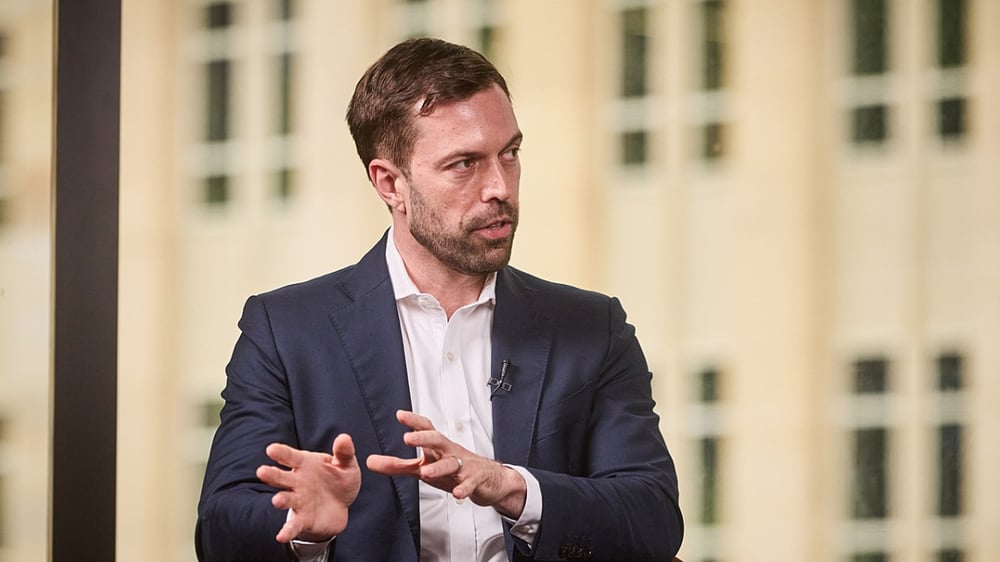
Magellan's Ben McVicar
INTERVIEW SUMMARY
Defining infrastructure properly
One of the first points McVicar makes is that the term “infrastructure” is often used loosely across the investment industry.
“You ask three infrastructure managers and you are going to get three different answers.”
Magellan takes a deliberately conservative approach. The firm focuses on businesses providing essential services with predictable demand and reliable cash flows. That typically leads the portfolio towards assets such as:
Regulated utilities (water, electricity and gas networks)
Transport infrastructure, such as toll roads and airports
Communications infrastructure, such as mobile towers
Companies currently held in the portfolio include Aena (BME: AENA), the Spanish airport operator; UK water utility Severn Trent (LSE: SVT); electricity network operator National Grid (LSE: NG); European tower company Cellnex (BME: CLNX); and Australia’s toll road operator Transurban (ASX: TCL).
Despite operating across different industries and geographies, these businesses share one critical characteristic.
“They are all monopoly or monopoly-like assets.”
That structure limits competition and helps underpin the dependable demand profile that infrastructure investors seek.
Magellan also deliberately avoids areas where revenues are heavily exposed to commodity prices or competitive dynamics.
“We tend to avoid things like competitive generation. If you get the supply and demand call right you can do very well, but it is not the game we are in.”
Instead, the strategy is built around long-duration assets capable of generating stable cash flows across economic cycles.
Why Magellan likes Cellnex
One of the most significant holdings in the portfolio today is Cellnex (BME: CLNX), Europe’s largest independent mobile tower operator.
The company owns more than 110,000 telecommunications towers across major markets, including Spain, France, Italy, the UK and the Netherlands. The investment case is supported by strong structural demand.
“Communication and digital infrastructure tends to be in demand and growing. Mobile phone usage and data usage goes up pretty significantly each year.”
Cellnex also benefits from long-term contracts with mobile network operators, often with built-in pricing escalators.
“You get very long-term contracts and typically you get inflation or fixed growth escalators on that contractual price.”
Despite those favourable characteristics, the stock has traded at a discount due to concerns around telecom industry consolidation.
“In each of their key markets their customers – the mobile phone companies – have potential consolidation happening.”
If operators merge, investors worry that fewer customers could reduce tower demand. Magellan has conducted extensive due diligence and believes the market may be overstating that risk. While consolidation could create short-term uncertainty, McVicar believes the underlying asset value remains compelling.
Rotating capital back to North America
The portfolio has also seen a subtle geographic shift. Earlier in 2025, Magellan held a heavy tilt towards Europe and the UK, where infrastructure assets were trading at meaningful valuation discounts to North America.
“We had positioned the portfolio just under 60% in UK and Europe because assets there were trading demonstrably cheaper than North America.”
As global capital flows shifted and the “US exceptionalism” trade began to unwind, that valuation gap narrowed.
At the same time, investors began looking more closely at hard assets with low obsolescence risk, which benefited infrastructure names. With valuations converging, Magellan has begun gradually reallocating capital back towards North America.
“We have been taking some capital out of Europe and the UK and rotating back to North America, where we can see some selective value appearing.”
McVicar stresses that the shift is incremental rather than dramatic, acknowledging that whilst the Fund is going against the traffic at the moment, there appear to be some compelling opportunities worth pursuing.
The interest rate debate
Infrastructure is often described as highly sensitive to interest rates, but McVicar believes that view oversimplifies the reality.
McVicar breaks the question around rate sensitivity into two pieces. In the short term, infrastructure share prices can move when interest rates change. But the more important question is what happens to the underlying businesses.
Infrastructure companies typically carry meaningful debt loads, but those borrowings are structured over long durations.
“They have long-term balance sheets locked in for seven or eight years or more.”
In addition, many regulated utilities are allowed to increase prices when rates rise, helping offset higher financing costs.
“If interest rates go up, you are actually allowed to increase the rates you charge to offset that cost.”
That dynamic can make infrastructure businesses far more resilient to rising rates than many investors assume.
The overlooked growth story
While infrastructure is often associated with defensive income, McVicar believes investors sometimes overlook its long-term growth potential.
Demand for electricity, data and transport continues to expand as economies grow and societies electrify.
As a result, infrastructure assets often deliver steady growth over long periods.
“We see steady, healthy growth in infrastructure. This is not knock-it-out-of-the-park growth in a single year, but 5-7% per annum compounded over multi-decade periods. That adds up to pretty serious returns over time.”
For investors focused on durable compounding rather than short-term excitement, that steady trajectory can prove extremely powerful.