

Hi there!
This is the last weekender of the year (they'll continue to run but shorter and pre-written). It features some of the big things I learned this year that I'm hoping to apply more in the year ahead.
I want to say a huge thank you to everyone who's tuned in. Simply opening this email supports the site. I hope my random ramblings, tables, and charts have provided some useful insight for your investing journey.
Stay safe and have a wonderful holiday season.
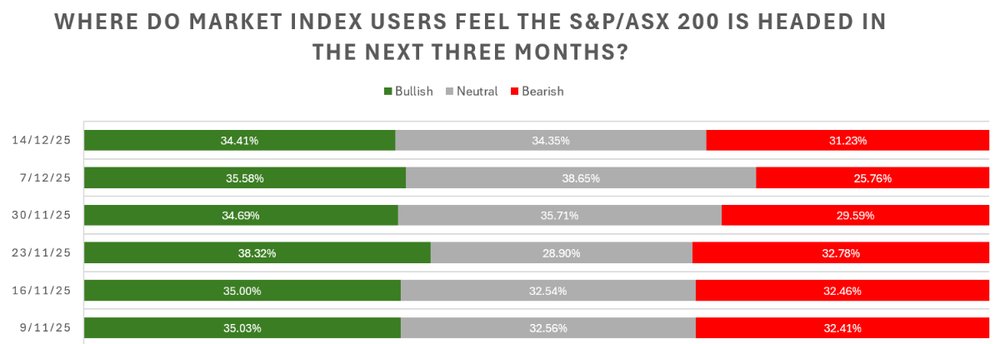
Investor sentiment survey
Buy the winners
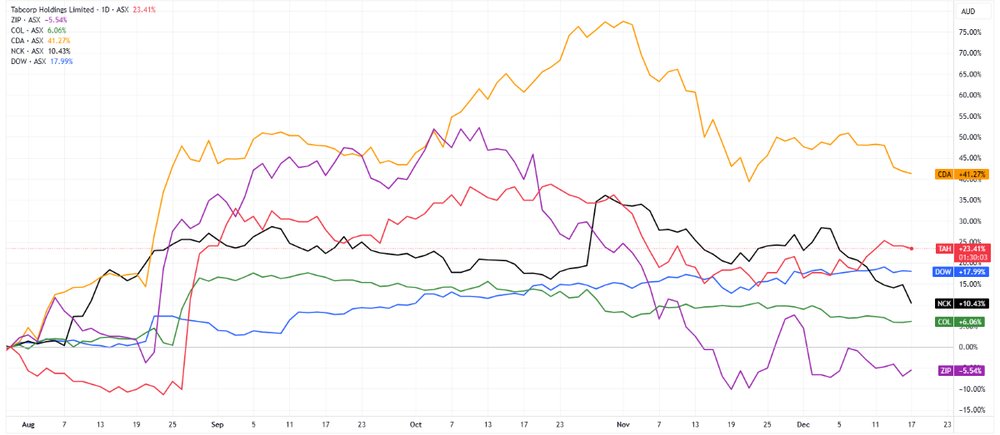
One of the biggest reminders for me this year is that winning companies tend to keep winning (until they don't) and the best time to apply this is during reporting season.
I sound like a broken record every February and August as I love to reference the same findings from Bell Potter's Richard Coppleson:
Over the last 16 reporting seasons (2008-2024), companies that beat earnings expectations delivered an average gain of 5.2% on the day of the result, then gained an additional 6.7% over the following four months.
The above chart is quite a messy one but it highlights a number of stocks from various sectors that reported better-than-expected earnings. Most continued to drift higher in in September and October, though started to cave from late-October, in-line with the broader market.
Sell losers
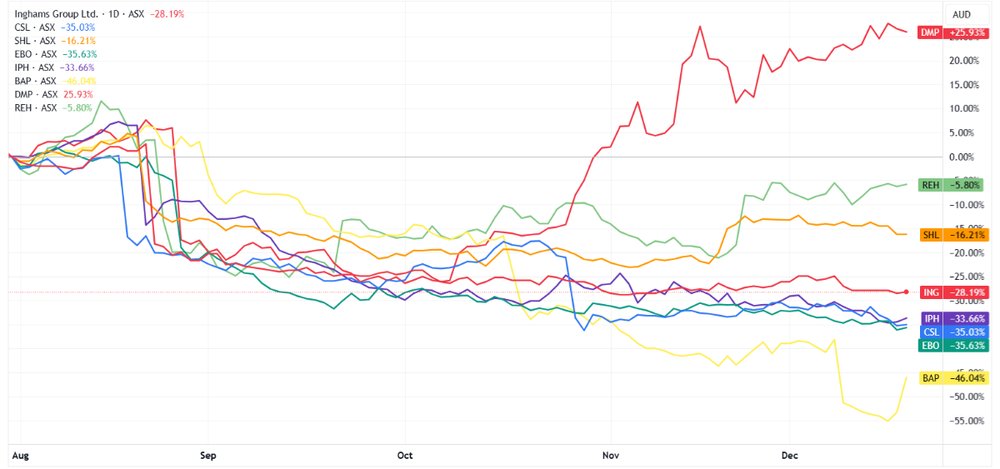
Coppleson's data also found that stocks missing earnings expectations dip an average 6.3% on results day, then fall an additional 8.4% over the next four months.
In late September, I ran my usual S&P/ASX 200 52-week low scan and noticed something interesting: eight of the nine stocks making fresh yearly lows were August reporting season losers. The list included Inghams, Sonic Healthcare, Ebos, CSL, IPH, Bapcor, Domino's, and Reece (August-to-date performance above).
These stocks suffered an average results day decline of 18.8% (yes they got absolutely obliterated), and despite such a large one-day selloff, they fell a further 9.2% on average between results day and 23 September.
IPH was probably the most eye-catching loser, falling 19.5% on results day and then logging an 18-session losing streak between 5 September and 1 October.
Keep it simple
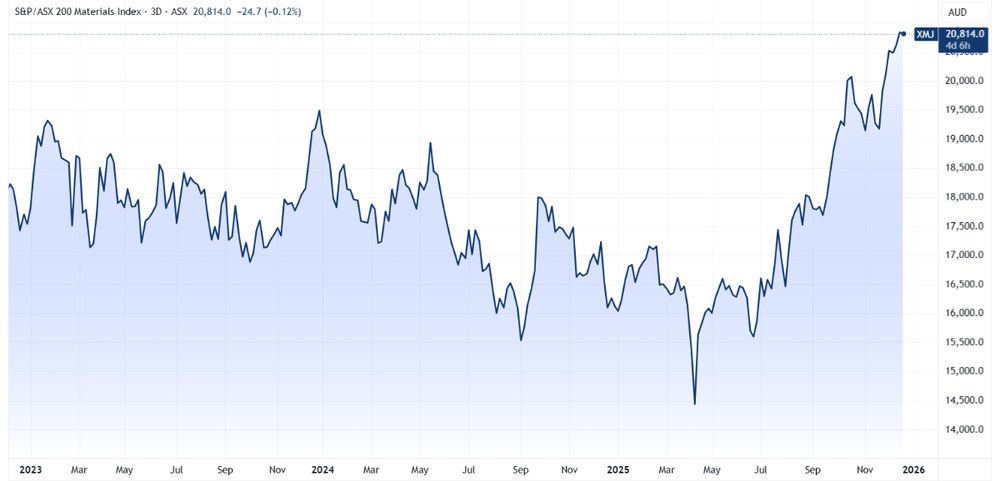
Sometimes, it’s the simple things that work.
One of my favourite processes comes from US trader Mark Minervini: “When you see a growing number of names in a particular industry making new 52-week highs (especially coming off a market low), this could be an indication that a group advance is underway.”
Every week, I write a simple article highlighting the S&P/ASX 200 stocks making 52-week highs and lows. You’d be surprised at what it catches.
For most of this year, the Materials sector was recording the most number of stocks making 52-week highs, entirely thanks to gold miners (usually 8-12 names)
In early October, the list started to broaden and include copper and rare earth names (LYC, SFR, CSC, ILU etc.)
By mid-October, iron ore and lithium names like RIO, LTR and MIN joined
In early-November, FMG, BHP, IGO and ORI also made fresh yearly highs
By early-December, SGM, AAI and PLS hit fresh 52-week highs
Listen to the market
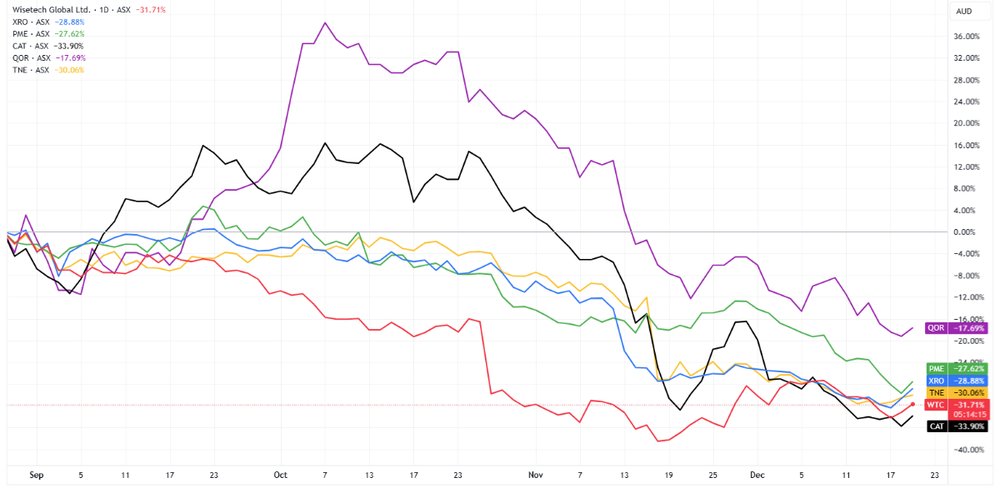
Aussie tech was hands down one of the year's most disastrous sectors. What began as massive rallies faded into modest double-digit gains, while the 'old guard' names tumbled to 1-2 year lows.
At first, I thought this was isolated fallout from company-specific issues:
Wisetech was navigating a complex E2Open acquisition while managing insider trading allegations and Richard White scandal(s)
Xero's hefty capital raise to acquire the expensive, unprofitable Melio business weighed on free cash flow expectations and diluted near-term earnings
But then a long list of key names started to roll over within a few weeks of each other:
Pro Medicus hit a three-month low in early October
Catapult sat near record highs on 24 October, then fell in 16 of the next 19 sessions, down 41%
Qoria reported a strong quarterly on 21 October and briefly rallied 9.9%, only to close the session flat. A month later, it was down 33%
Technology One had been grinding lower since June, down 12% by late October to a five-month low. Then it suffered a 17% one-day selloff following its 18 November FY results
Most of these stocks continued to struggle through November and December. I guess this was a clear and broad warning about sector rotation and mean reversion for valuations.
Take profits

Markets are wild, and nothing stings quite like watching hard-earned gains evaporate when the tide turns. A personal example of this is when I bought Qoria at the start of the year and watched an ~80% YTD gain fade to oblivion.
Time in the market matters, but so does knowing when to take some chips off the table.
The thing is, profit taking doesn't mean dumping your entire position. I guess some strategies for me to test/implement include:
A trailing stop loss
A stop loss at a specific price
Taking a partial gain after a massive run
Taking a small loss
Exiting the entire position as the underlying thesis is void
Selling half after the position has doubled
Last laughs