Jacob Mitchell is finding value in places AI can't touch
The Antipodes CIO talks about mispricings in structural growth trends and why the benchmark is the biggest risk to your portfolio.

Mentioned
This interview was filmed 26th February 2026.
The global equity benchmark has never looked quite like this.
After two decades of US exceptionalism and tech dominance, passive investors now hold a portfolio that is heavily concentrated in a handful of mega-cap names and Jacob Mitchell, Chief Investment Officer at Antipodes Partners, thinks most investors haven't fully reckoned with what that means.
"Allocators have shifted a lot of capital into passive strategies and into core strategies. So across portfolios, there's quite a lot of benchmark risk. And as concentration has built up in the benchmark, so has that value at risk."
Mitchell manages the Antipodes Global Value Fund, a valuations-focused core global equities strategy accessible as an ETF on the ASX via the Antipodes Global Value Active ETF (ASX: AGX1). The strategy looks structurally different to the index by design.
It is deliberately underweight North America and mega-cap tech, and tilted towards Europe and emerging markets where he sees more attractive valuations.
In this interview, Mitchell breaks down the benchmark risk investors need to be aware of, the mispricing opportunities in US and European equities and the role of value allocation as a diversifier in a portfolio.
Read the summary below or watch the video in full above for all of the insights.

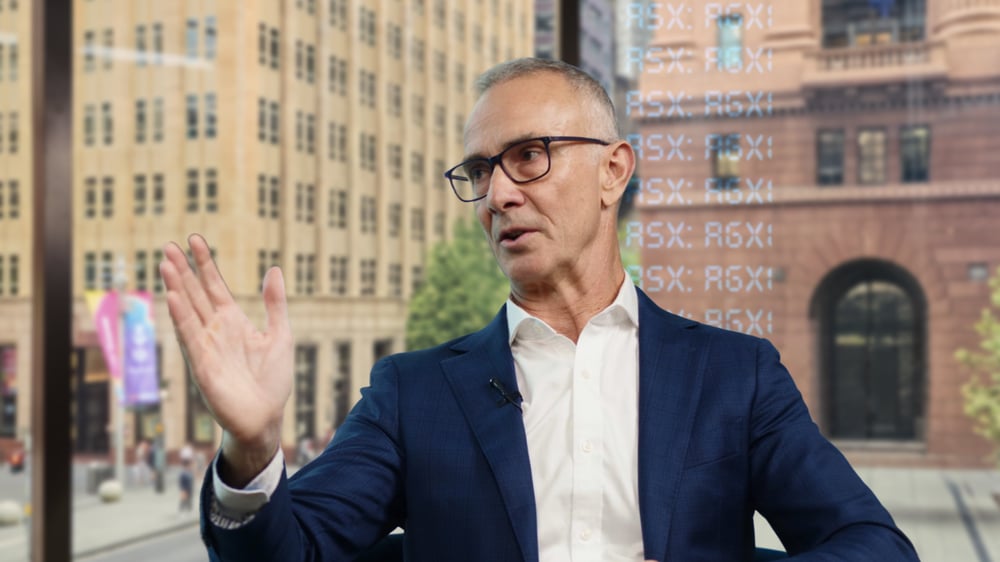
Jacob Mitchell is the CIO of Antipodes Partners.
Where the mispricings are
At the macro level, Mitchell says US equities are still trading above long-run trend valuations, while Europe and emerging markets remain below.
The same dynamic plays out at the factor level, where growth and quality stocks look expensive relative to value.
While that is big picture, Mitchell says the Antipodes value approach is bottom up.
"We're looking for those opportunities that are cheap relative to their growth and their business resilience."
The combination of price, growth, and durability is what he calls pragmatic value - always looking for stocks that are cheap relative to their growth, whether that is low growth or high growth, and distinct from deep value strategies that often carry heavy cyclicality and are highly sensitive to the economic cycle.
Opportunity in structural trends
One holding that illustrates Mitchell’s approach is Brookdale Senior Living (NYSE: BKD), a US aged care operator.
The investment thesis started with examining the aged care industry in the US and the strong demographic tailwinds. As Mitchell says, “We've all probably heard of the grey tsunami and there's nothing more predictable than demographics in ageing, unfortunately.”
The oldest baby boomers are now turning 80, and Mitchell estimates that demand for aged care from that cohort will more than double before the end of the decade. Supply hasn't kept pace, and rents across the sector have been running below replacement cost, limiting new development.
"Limited supply, demand growing very rapidly. That's what you like in a real estate exposure."
The company also required a management turnaround, which Mitchell says is now well underway. "It's very easy to sell a bed when there's so much demand,” said Mitchell. “It's about running it efficiently."
Antipodes invested when Brookdale was trading at less than 10 times EV/EBITDA, a significant discount to the sector leader, which was trading at close to 30 times.
He also flags Brookdale as a rare AI-agnostic structural trend opportunity that avoids AI risk in a volatile market that hasn’t yet figured out who the AI winners and losers are.
A new position
The portfolio has a definitive tilt into Europe, in particular, high quality European multinationals. As evidence of European fiscal stimulus shows up in infrastructure projects, defence spending and energy transition, Antipodes have been looking for ways to play that opportunity as it begins to come through, particularly in finding more AI-agnostic options.
An example is the more recent addition to the portfolio is Alstom (EPA: ALO), the French rail company that has simplified itself down to a single rail rolling stock, signalling and rail services business after a long history as a traditional diversified conglomerate.
Mitchell likes the setup for a few reasons. The Western rail industry has consolidated to a handful of operators, with limited competitive overlap between Chinese and Western suppliers.
Alstom trades on roughly 13 times earnings, for a business Mitchell believes can grow more consistently than its history suggests.
"We like to buy these sorts of businesses after they've gone through a downturn that's led to consolidation at the beginning of a demand upturn," he says.
Managing risk in a contrarian portfolio
Running a portfolio that looks this different from the benchmark creates its own risks, something Mitchell says many value based managers have had to learn the hard way.
You can have a value tilt in your portfolio....it's always a question of what baggage is coming with that tilt. And sometimes, especially deep value managers, will bring a lot of cyclicality along with that. And so their portfolios tend to be quite episodic and they're very sensitive to the economic backdrop.
Mitchell argues pragmatic value gives more levers to avoid that.
"We really just step back and we think about all the bottom up selection decisions and then we think about how the tilts we've built in and whether or not we've been compensated for any of the bigger tilts."
If a regional or sector tilt isn't being adequately rewarded, the portfolio is adjusted. It's a discipline he credits for improving consistency in returns relative to risk.
How to use the fund
Where traditionally investors would use style buckets for a portfolio, whether it be for growth or for value, Mitchell says the more useful lens is diversification, given how much quality and growth already dominates and distorts the index.
"Value is very much underrepresented in the benchmark. The role that a value allocation plays is really it's a diversifier for your passive allocation or for your core allocation."
As for what to watch to judge whether the thesis is working, he says it’s all about consistency:
“It's returns relative to risk. If you were to see our returns sort of roll off at the same time that the volatility was going up, I think that would certainly be a warning sign.