Is Boss Energy buyable after its horrid FY26 guidance?
Boss Energy crashes 45% after shocking FY26 guidance reveals higher costs and lower production just days after CEO announced departure.

Mentioned
KEY POINTS
- Boss Energy's FY26 guidance shows costs 23-42% higher than expected while production falls 7% short of estimates, triggering a 45% share price collapse to $1.88.
- CEO Duncan Craib announced his departure just one week before the bad news, having previously sold $21 million worth of shares at $5.63 in May 2024.
- An independent review will assess potential downgrades to feasibility study assumptions due to "less continuity of mineralisation and leachability" at the Honeymoon project.
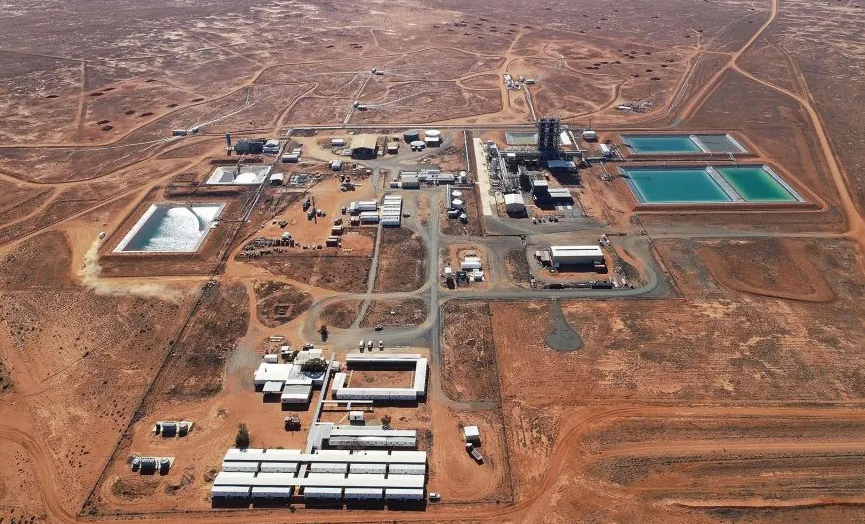
Boss Energy (ASX: BOE) is experiencing a brutal selloff, plummeting as much as 45% to $1.88 on Monday after the company's FY26 production and cost guidance fell dramatically short of market expectations.
The timing couldn't be worse. Just a week earlier, CEO Duncan Craib announced his departure effective September 30, 2025. Adding to investor concerns, Craib had already offloaded a majority of his shareholding in May, selling approximately $21 million worth of shares at $5.63 each.
While Boss provided FY26 numbers, its explanation for the underlying issues remained frustratingly vague. "Boss has identified potential challenges that may arise in achieving nameplate capacity ... largely due to the potential for less continuity of mineralisation and leachability," the company stated, adding that "an independent review by subject matter experts will commence shortly to determine the extent to which the above affects early feasibility study assumptions."
Shocking FY26 guidance
Boss Energy's revised figures versus Macquarie estimates (as at July 2025) reveal the extent of the disappointment:
FY26 C1 cash cost guidance: A$41-45/lb vs. $34.93/lb (23% higher than expected)
AISC: A$64-70/lb vs. A$47.29/lb (41.7% higher than expected)
Capex: A$56-62m vs. A$36m (64% higher than expected)
Honeymoon production: 1.6m lbs vs. 1.72m lbs (7% miss)
This points to dramatically higher costs and capital expenditure, alongside weaker production. What's more concerning is the reference to "potential for less continuity of mineralisation and leachability," which could lead to further downside risks to production, costs and resource grades.
This echoes Core Lithium's experience, where the company announced successive FY24 and FY25 production cuts due to recovery rates well below pre-start testwork projections.
Where does this leave Boss?
Boss has created a perfect storm of negative catalysts:
Today's quarterly and full-year production report was pre-announced. Boss previously said it had met its FY25 Honeymoon production guidance
FY26 will deliver less uranium at higher costs with increased capital expenditure
Lingering uncertainty around "less continuity of mineralisation and leachability" means the independent review could reveal substantial downgrades to EFS assumptions
The CEO's resignation timing raises uncomfortable questions about governance and whether he's abandoning a sinking ship
While the FY26 guidance disappointed across all metrics, today's selloff represents an extreme turn in market sentiment and the absolute loss of investor confidence.
A look at Paladin Energy
For context, Paladin Energy faced similar challenges when it slashed FY25 production guidance last November from 4.0-4.5 million pounds to 3.0-3.6 million pounds — a 22.5% reduction at the midpoint. The company withdrew all other guidance, citing "ongoing challenges and operational variability" at its Langer Heinrich Mine in Namibia, finishing that session down 28.9%.
The market is punishing Boss more severely, likely due to greater uncertainty around project grades and broader economic implications. While Boss investors hope for a recovery/bounce, Paladin's stock remains near selloff levels.

Paladin Energy price chart, guidance selloff day marked red (Source: TradingView)
The Bottom Line
Boss retains leverage to the uranium sector with two producing assets (Honeymoon and Alta Mesa), a large and growing resource base, and approximately $224 million in cash and liquid assets.
However, the company now finds itself in a precarious position where investors are at the mercy of the independent review's findings. Would you really want to hold the stock ahead of another potentially damaging (or life-saving) outcome?